
Leather Sleeves & Cases for iPad & MacBook


Handmade in Hamburg
SUSTAINABLE SINCE 2011
Timeless Apple cases and accessories – made from the finest leather and merino wool felt.
Frequently Asked Questions
Because full-grain leather keeps its natural surface. Differences in colour, pores, veins and small scars can be visible. Every sleeve therefore turns out a little differently.
Yes. Light, touch and use deepen the colour and create a shine in the places that are touched often. It becomes visible after about a year. That is the patina of vegetable-tanned leather.
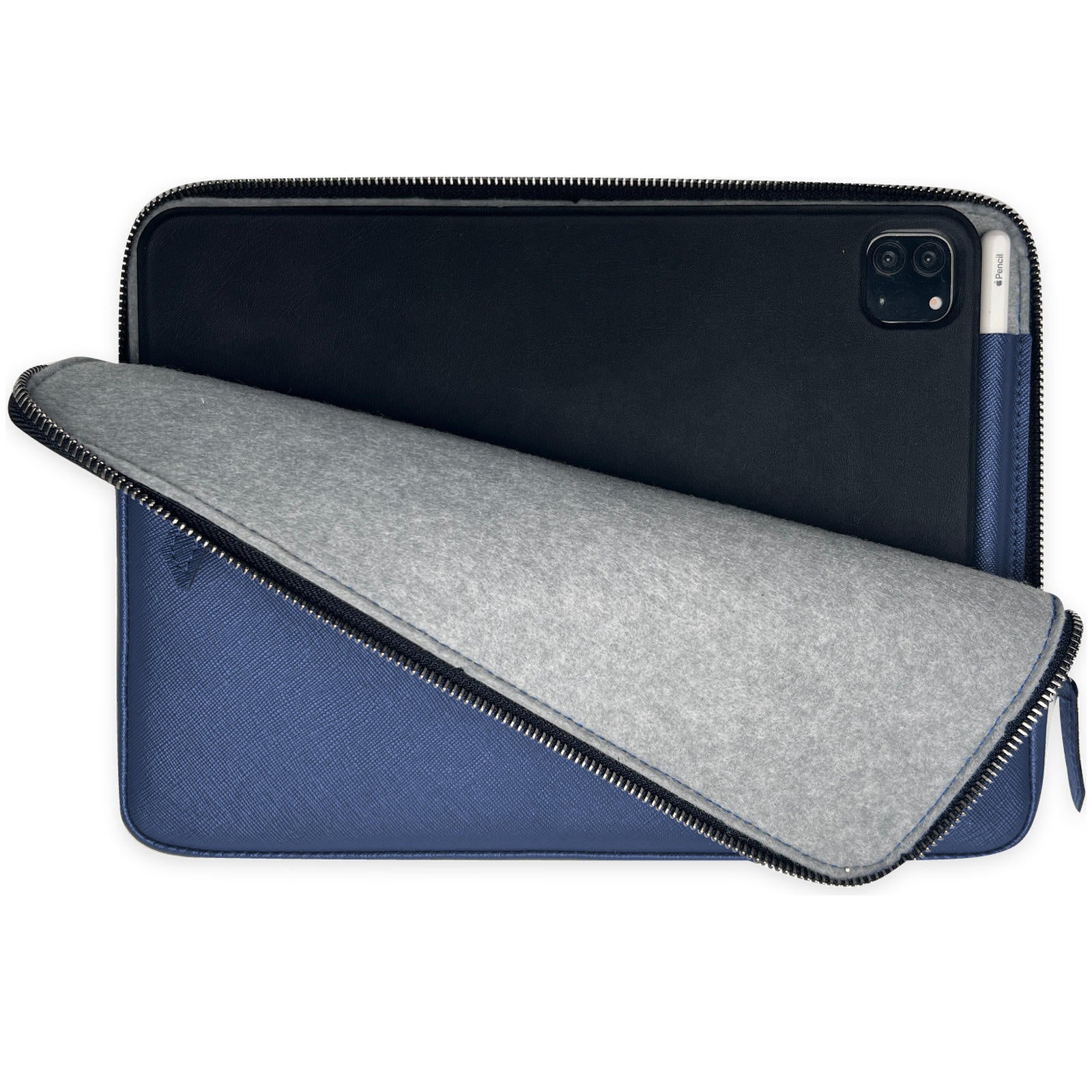
The iPad versions of the ANGUS are made for the devices named in each case, also with a Magic Keyboard, a Smart Folio or a comparable cover. Choose the right device size on the product page.
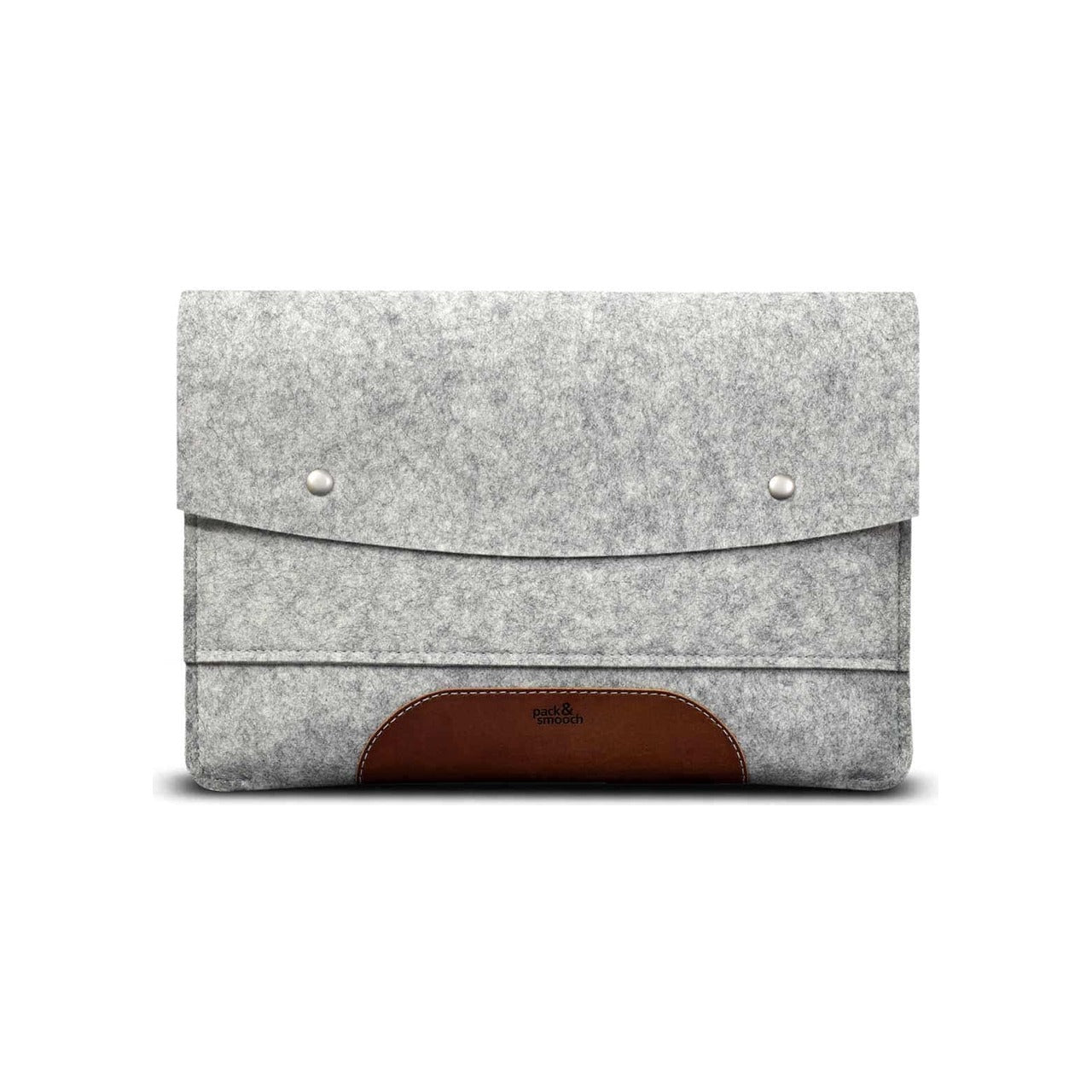
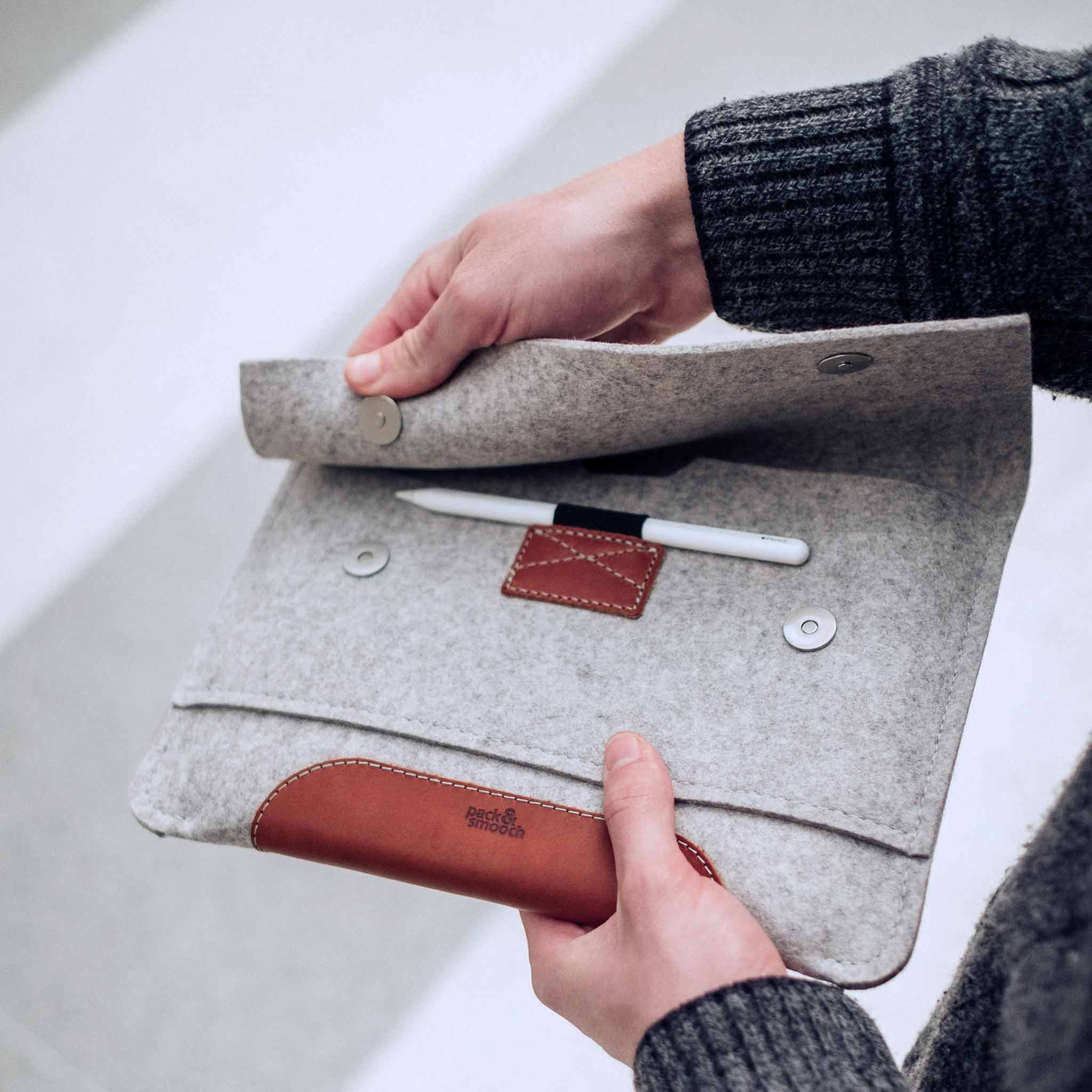
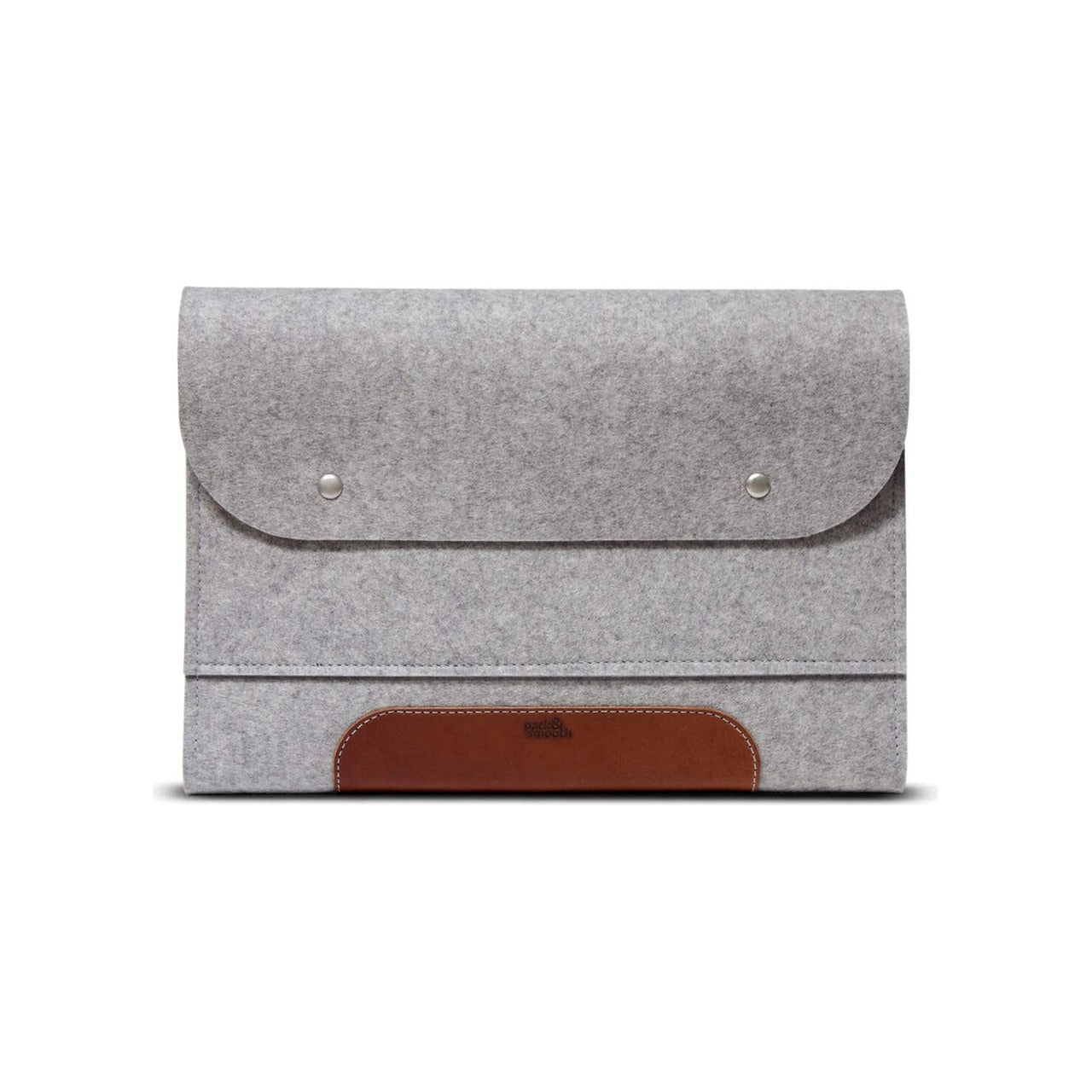
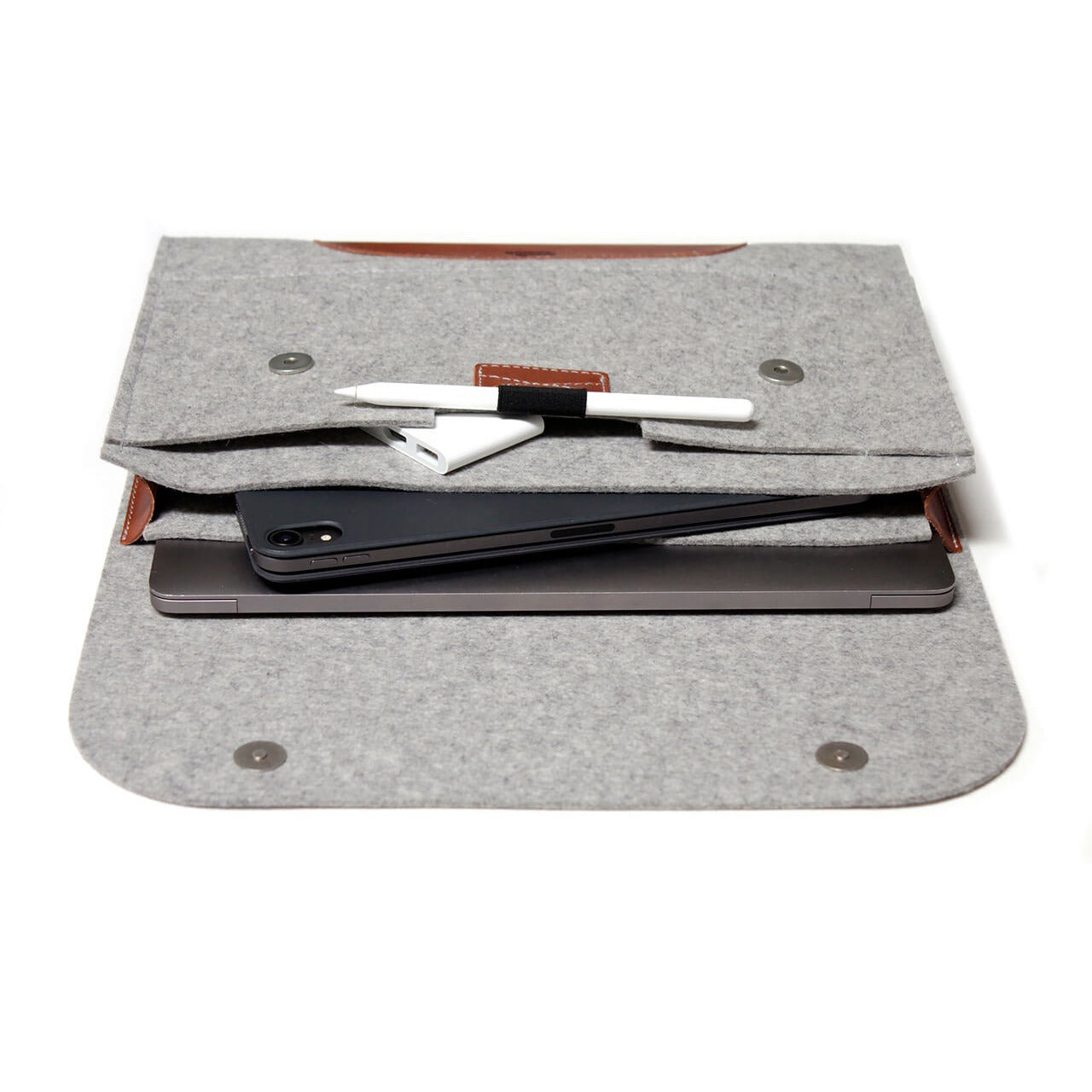
Yes. Besides the full-leather versions of the ANGUS, the HAMPSHIRE for iPad and MacBook and the CORRIEDALE bag are here too. With these the Merino wool felt sits on the outside and the leather is used as an applied patch or on the side panels.
The ANGUS is made for iPad, for MacBook in several sizes and for the Microsoft Surface Pro. On the product pages you will find the compatible models as well as the inner and outer dimensions. If you are unsure, write to us with the exact model name of your device.
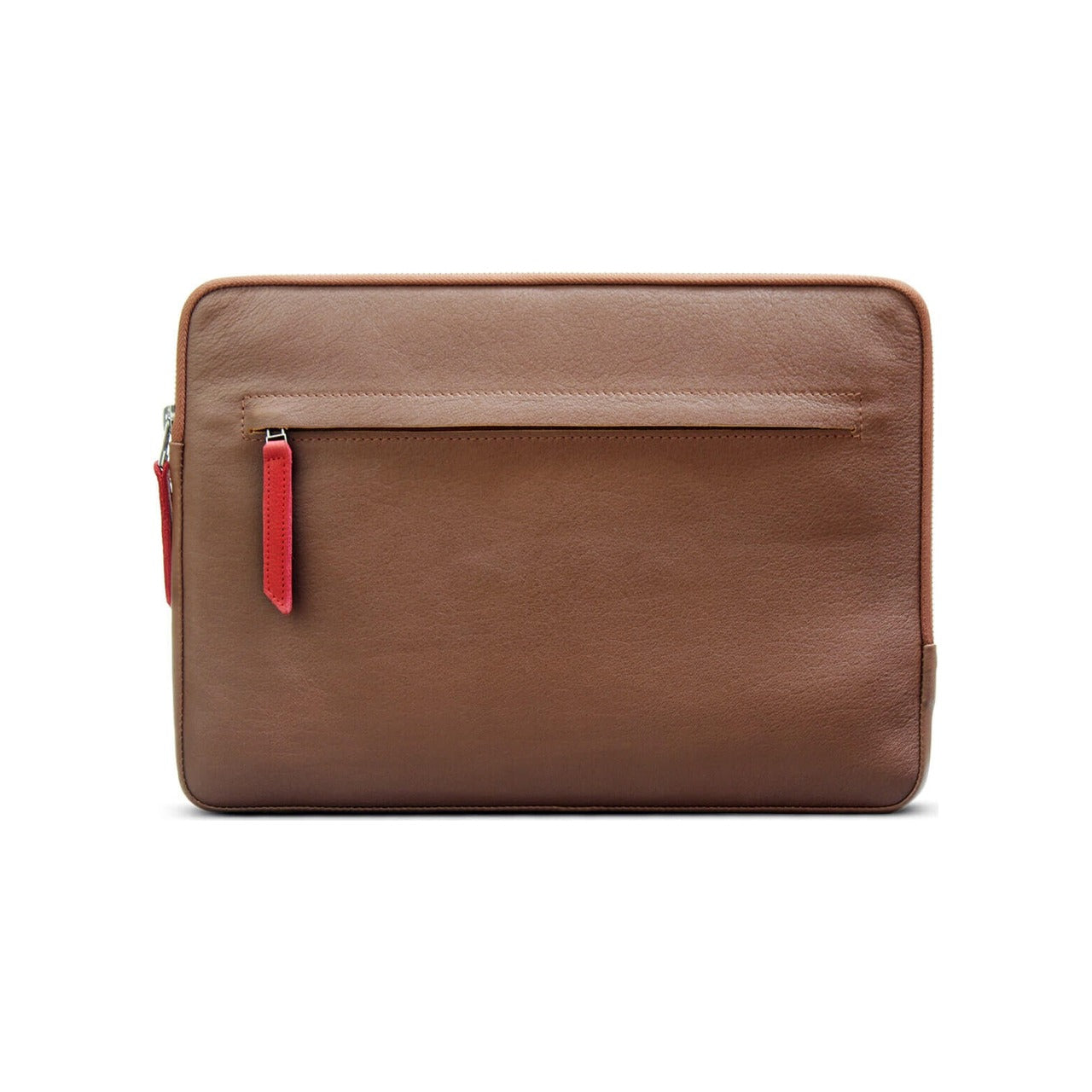
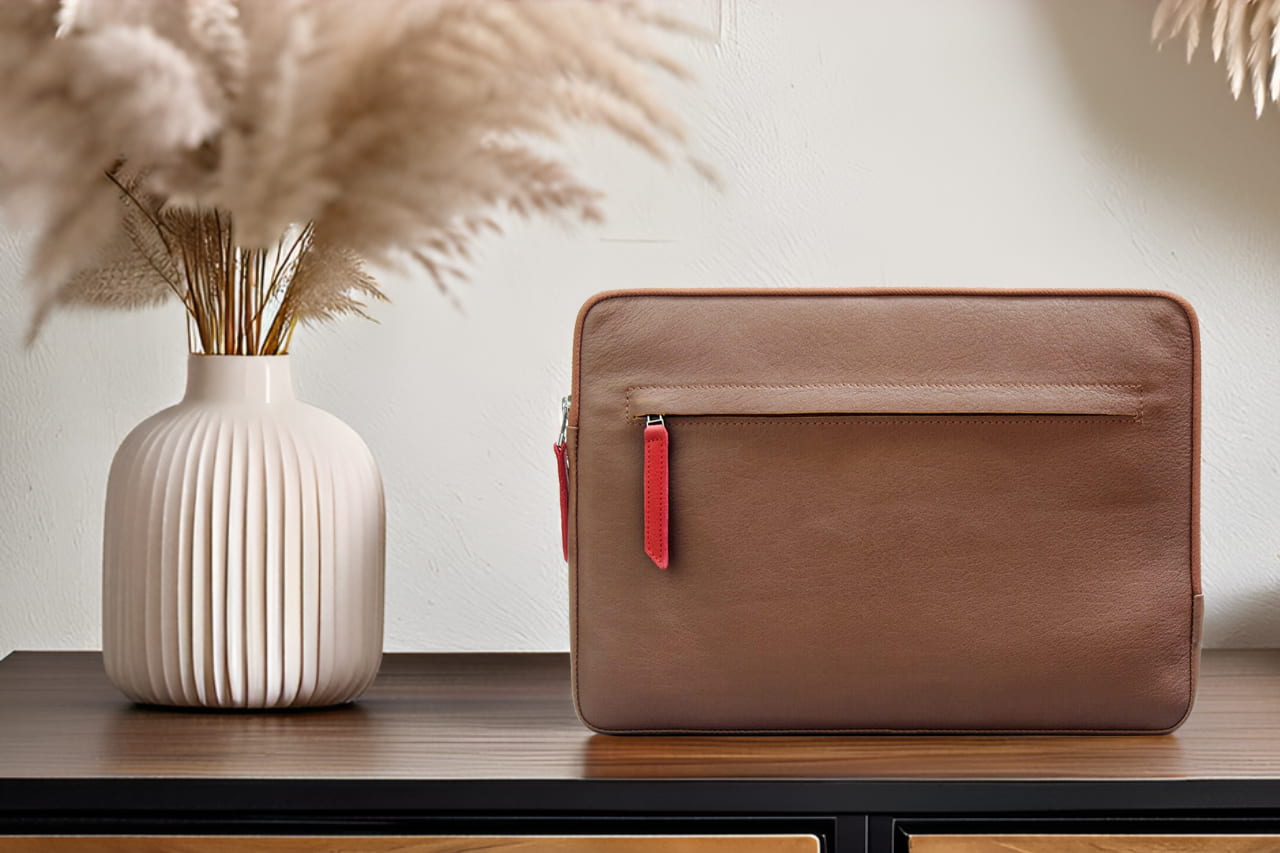
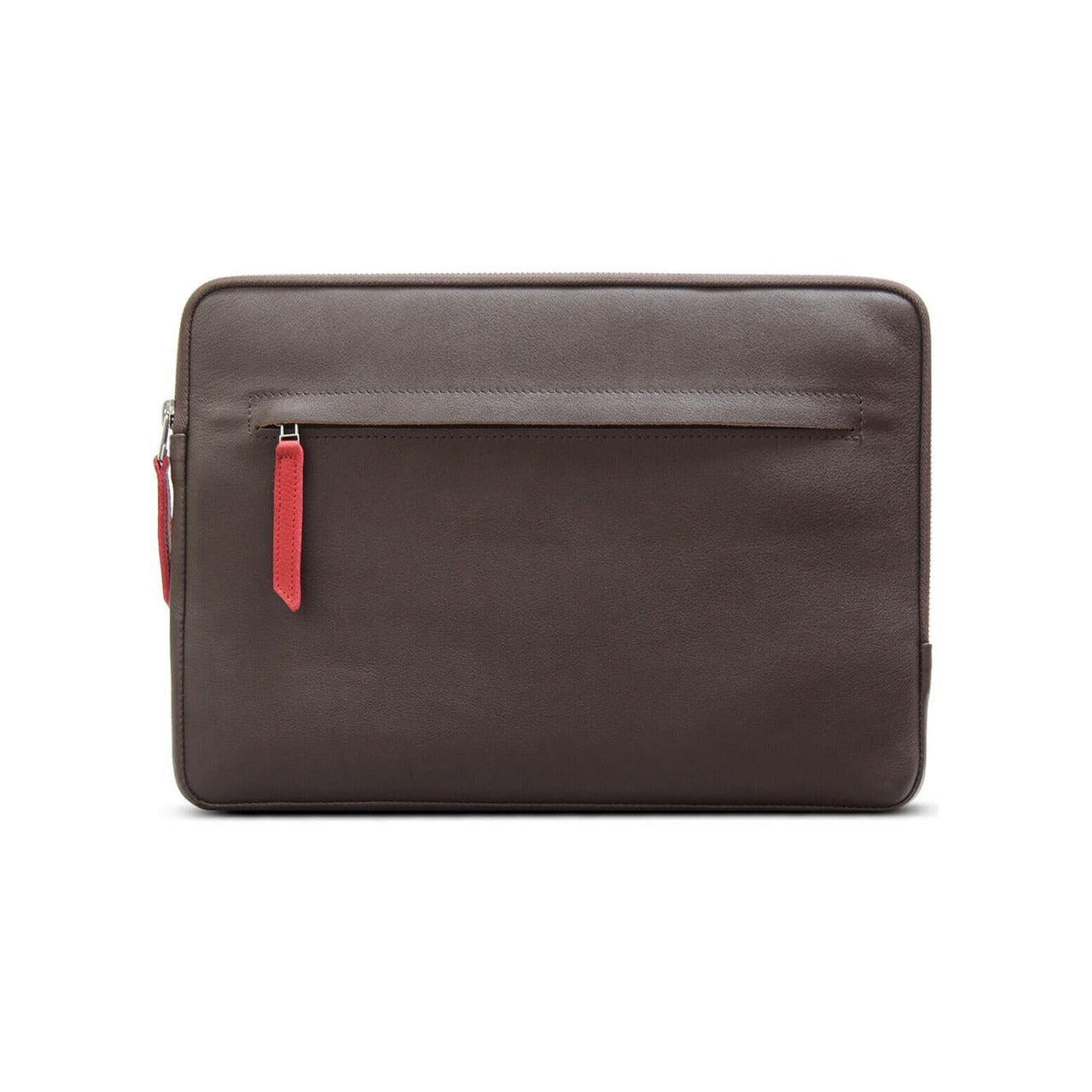
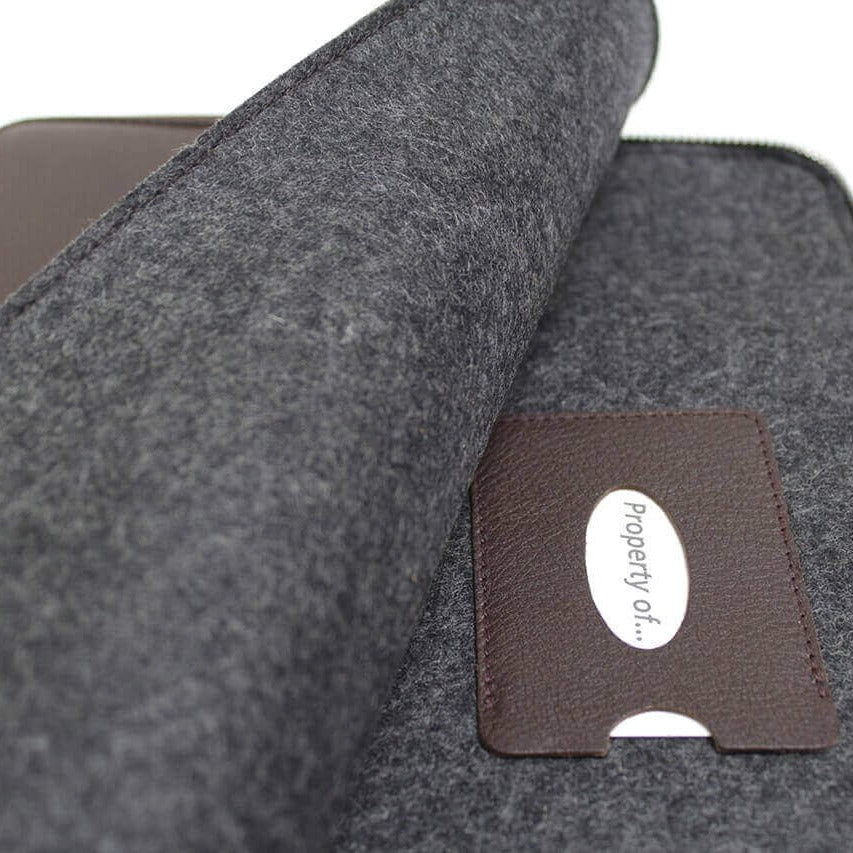
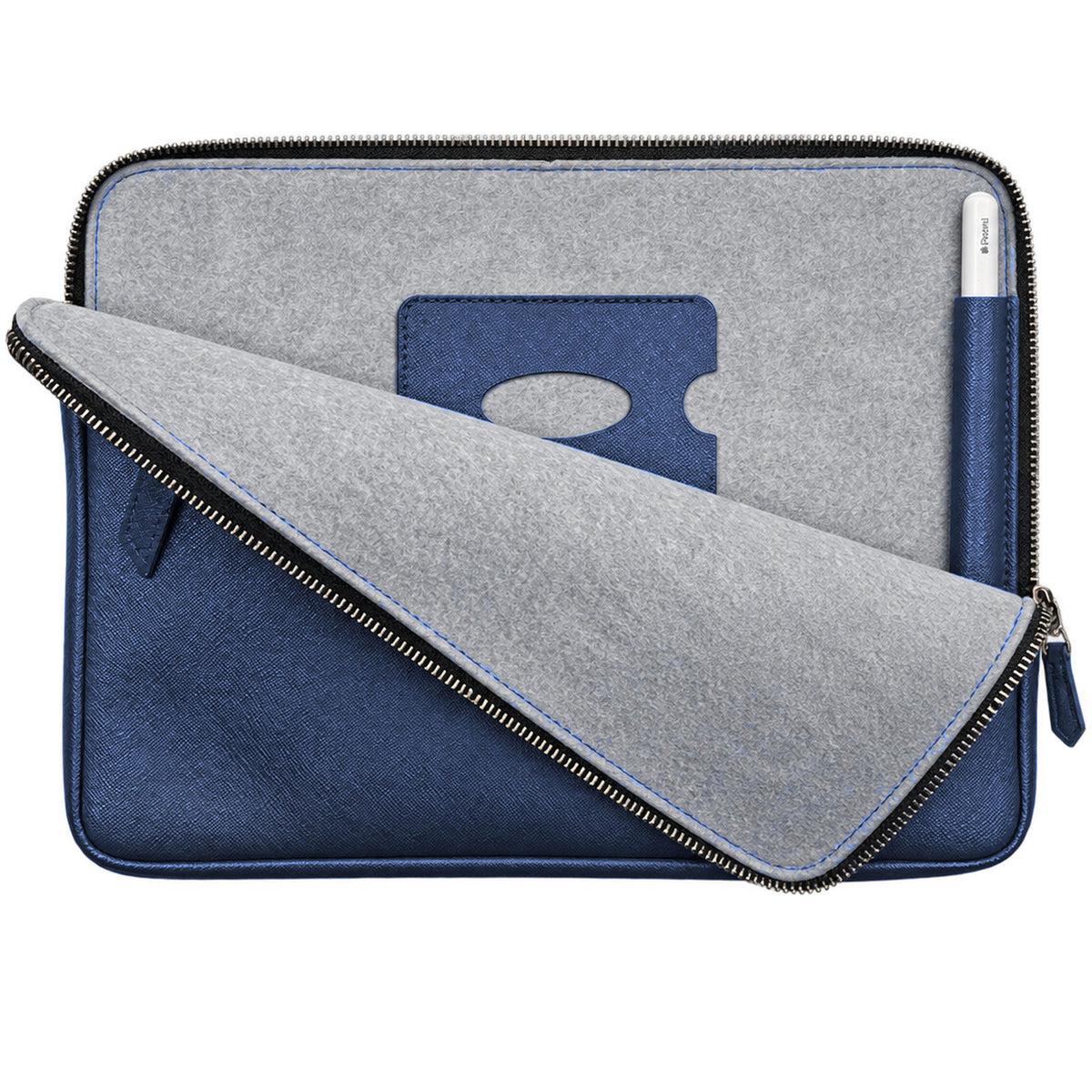
On the outside yes. The outer shell is full-grain, vegetable-tanned cowhide leather. Inside, Merino wool felt protects the device and keeps the metal parts of the zip at a distance.
That depends on the part. The hides arrive at our workshop whole, just under 2 mm thick. There we split and skive the leather to suit its later job. The Merino wool felt inside is 3 mm thick.
First dab it with a dry cloth, do not rub. Then let it dry completely at room temperature. Do not put it on a radiator and do not use a hairdryer. Water can leave marks, temporarily or permanently.
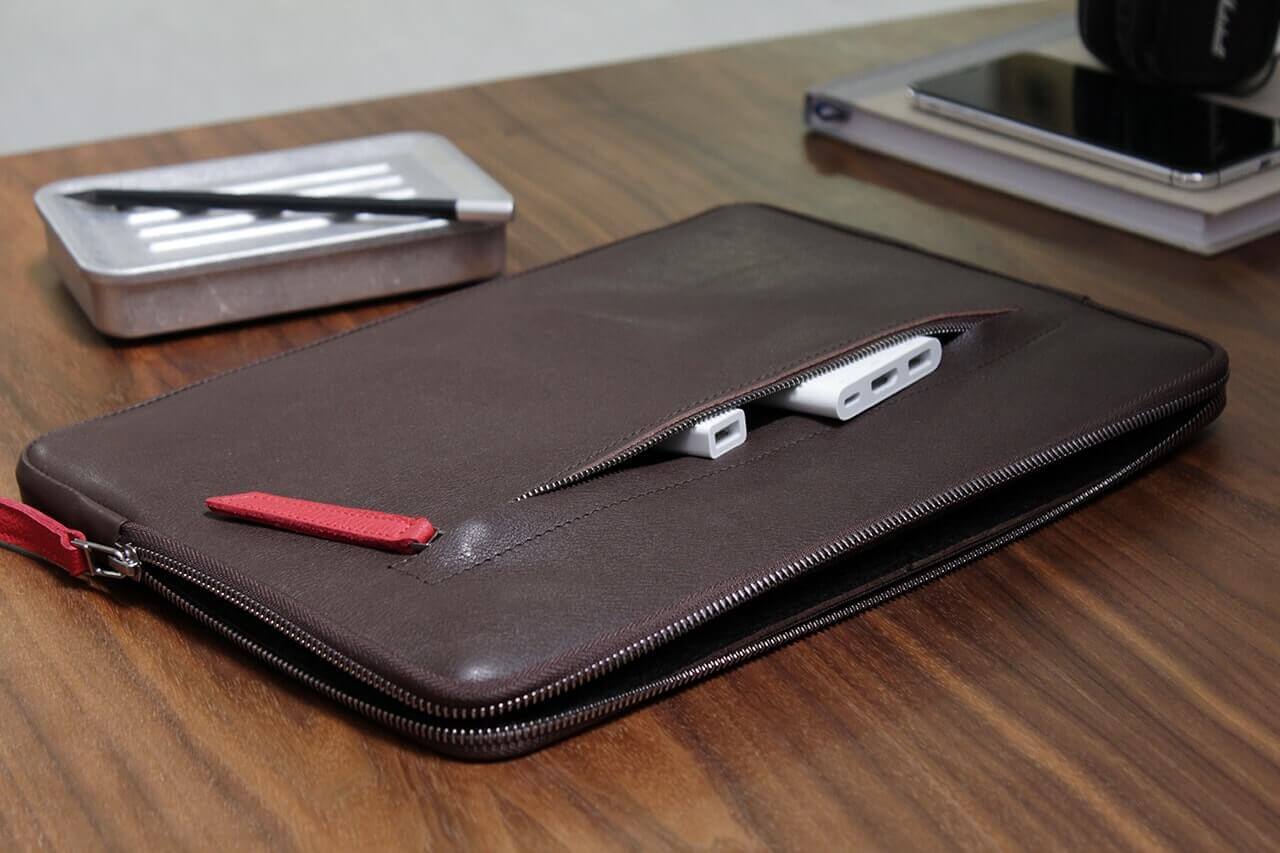
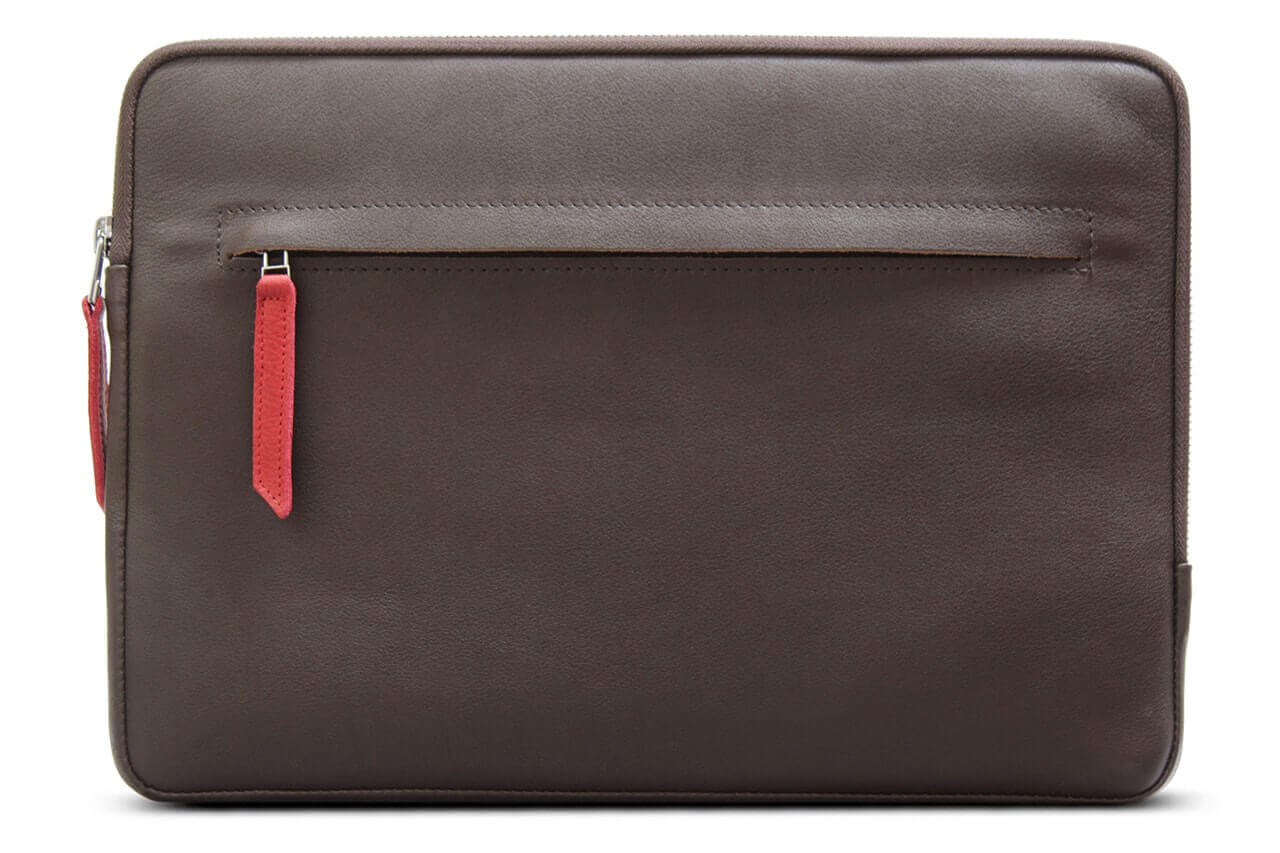
No. The front pocket is meant for flat things such as a charging cable, a USB-C adapter, cards or a slim notebook. For a power adapter and larger accessories the CORRIEDALE XS or the LONGFORD are the better choice.
In our own workshop in Hamburg. Splitting, skiving, punching, sewing, embossing, hardware and final inspection all happen here – since 2011, with long-standing partners for single steps.
Leather sleeves for iPad and MacBook – handmade in Hamburg
A good leather sleeve does not just protect you until the next device. It stays with you for years – and it does not always look the same, it looks more and more like yours.
We make our ANGUS from vegetable-tanned, full-grain leather from Tuscany. Leather on the outside, Merino wool felt on the inside. Every size has its own shape, every part its own material thickness, and every sleeve is made by hand.

Which leather sleeve fits your device?
If you are looking for an iPad sleeve in leather or a MacBook leather sleeve, you should not have to study material science first. What matters first is the device and the way you carry it.
ANGUS for iPad
For the iPad Pro and the iPad Air in 11 and 13 inch – also with a Magic Keyboard, a Smart Folio or a cover. The zip opens wide without rubbing over the device. The flat front pocket has room for a charging cable, an adapter, cards or a slim notebook.
ANGUS for MacBook
For the MacBook Air and the MacBook Pro from 13 to 16 inch. On the outside, dimensionally stable leather protects the edges; on the inside, the device lies on soft Merino wool felt. The fit follows the particular device size, not a universal measurement.
For Microsoft Surface as well
The ANGUS and the HAMPSHIRE are also made for the Surface Pro. Which models fit and how the two differ is set out under Sleeves for Microsoft Surface Pro.
If you want to take more with you
A power adapter does not belong in a flat front pocket. If a charger, papers or a second device have to come along beside the device itself, a roomier bag is the better choice. That is what we built the CORRIEDALE for. If it is only the accessories that need to travel in order, the LONGFORD cable bag is enough.
How much leather is in which model?
We say this clearly, because the word “leather sleeve” is used generously in the trade. With us the assignment is simple:
| Model | Outside | Inside | Role of the leather |
|---|---|---|---|
| ANGUS | full-grain leather | Merino wool felt | the complete outer shell |
| CORRIEDALE | Merino wool felt with leather side panels | Merino wool felt | the side panels, plus edges and details |
| HAMPSHIRE | Merino wool felt | Merino wool felt | patch and details |
| SUFFOLK | Merino wool felt | Merino wool felt | logo and functional elements |
If you are looking for a real leather sleeve, the ANGUS is the model for you. It is also our best protected sleeve: inside there is the same 3 mm of Merino wool felt as in the HAMPSHIRE, and the leather comes on top of that. The HAMPSHIRE and the CORRIEDALE are lighter and less expensive – but you do not get more protection there.

What you cannot see in a finished sleeve
We do not buy the leather as ready-cut parts. We work whole hides, just under 2 mm thick. That thickness does not suit every part of a sleeve: in some places it is exactly right, in others it builds up too much.
Before a hide can become an ANGUS, we have to decide how each single part should behave later on: where does the sleeve need to hold its shape? Where does the leather have to fold over? Where do several layers meet? And how does the zip stay smooth even though a sensitive device lies underneath it?
That is where craft begins for us. Not at the sewing machine.

Splitting: the thickness of the surface
On the splitting machine the hide runs over a roller bed against a band knife. This brings the whole surface to the thickness the later part needs.
A back panel may stay firmer. A front pocket has to be more flexible. A tab needs a different thickness than the area that protects the edge of the device. If we used the same leather for everything, the sleeve would be either too soft or too thick at the transitions.
Skiving: the thickness of the edge
At the edges the leather is worked thinner on the flesh side. Not across the whole surface, but only where several layers meet during sewing.
That sounds like a detail. On a zipped sleeve, however, it decides whether a seam stays flat, whether the leather forms creases and whether the zip still runs easily after years.


Why we use vegetable-tanned leather
Mineral tanning is widespread, fast and the right choice for many uses. For our sleeves we still go a different way: full-grain, vegetable-tanned leather. Not because it makes the loudest sustainability claim, but because this material behaves the way we need it to for a long-lasting everyday product.
It changes
Vegetable tannins react to light, touch and use. Over time the leather becomes darker, smoother and shinier in the places that are touched often. A light brown ANGUS slowly moves towards cognac. Small marks do not always disappear – they join the surface.
It stays recognisable as a hide
We use the natural grain side and do not sand it down to look even. Pores, veins, small scars and differences in colour can therefore stay visible. Two sleeves in the same colour are related, but never identical.
Plant matter as the basis of the tanning
The tanneries of the consortium work with tannins from bark, wood and fruit. That does not mean other kinds of tanning are bad. It means we know which process and which material behaviour we have chosen for our products.

From Tuscany to Hamburg
Our leather comes from family-run tanneries in Tuscany that belong to the Consorzio Vera Pelle Italiana Conciata al Vegetale. The member businesses produce exclusively in Tuscany and commit themselves to the production rules of the consortium.
The tannins used come from plant sources – among them woods and barks such as chestnut, mimosa and oak. The process takes time. That is exactly what later makes the surface so receptive to light, touch and patina.


How a hide becomes your sleeve
There are many quiet steps in a finished ANGUS. None of them is spectacular. Together they decide whether the sleeve still works as a matter of course after two years.
1. Its own shape for every size
Every iPad and MacBook size has its own cutting die made of bent steel band. That is why we do not sew a universal sleeve meant to somehow fit several devices.

2. Every part comes from the right area of the hide
A hide is not the same everywhere. The back area is firmer, other areas are more flexible. So when we lay on the cutting die, we decide not only where a part still has room, but which area of the hide will best do its later job.


3. Sewing follows a fixed order
The front pocket, the zip, the leather outer shell and the wool felt inner layer are put together one after the other. Every step has to sit before the next one comes. What is once sewn cannot be corrected later.
4. The signet is blind embossed, not printed
Heat and pressure form our signet directly into the leather. Because no colour is involved, the process is called blind embossing. The branding is therefore not a layer lying on the surface; it develops its patina together with the sleeve.


5. We sew our zip tabs
At this point others simply set a rivet. With us every zip tab is closed all round with a fine seam. After that the open cut edges are worked cleanly and the finished sleeve is checked. Only then does it leave our workshop.

Leather or Merino wool felt?
The most honest answer is: it depends on how you use your device.
| ANGUS | Felt models | |
|---|---|---|
| Build | leather outside, 3 mm Merino wool felt inside | 3 mm Merino wool felt |
| Protection | the highest, felt plus leather | the felt absorbs knocks |
| Edge protection | dimensionally stable thanks to the leather | softly enclosing |
| Weight | higher | lower |
| Moisture | leather can take on stains and marks | naturally water-repellent, but not waterproof |
| Ageing | develops a patina | changes far less in appearance |
| Price | higher | lower |
If the sleeve goes into a tightly packed backpack every day and should be as light as possible, the felt models are the more sensible choice. If you want the maximum protection and a material that visibly becomes more personal over the years, the ANGUS is the right one.
Patina: the sleeve will not stay new
This is not a side effect that we want to play down. It is part of the decision for vegetable-tanned leather.
In the first months little happens that you can see. After about a year the places that are touched often become darker above all: the zip, the edges and the area where you grip the sleeve. After that the colour deepens and the surface gains more shine. After several years, small scratches, touch and everyday use can no longer be told apart.
If you want a surface that stays as unchanged and even as possible, you will be happier with a different material. If you want to see that an object has been used, that is exactly why you choose leather.
Leather care: as little as possible, as much as necessary
- In daily use: take off dust with a dry, soft cloth. Usually the leather needs nothing more.
- After it gets wet: first dab it with a dry cloth, do not rub. Then let it dry completely at room temperature. Do not put it on a radiator and do not use a hairdryer.
- If the leather looks dry: use a colourless care product suitable for vegetable-tanned leather very sparingly, and test it on a hidden spot first.
- With stains: do not rub hard. Moisture and grease change the colour at first. Much of it evens out over time, but we cannot promise that it goes away completely.
- In the sun: long one-sided sunlight can make the leather darken unevenly.
Patina can be accompanied, but not controlled. That is exactly why a well-used sleeve looks different from a new one at some point.
How to recognise good leather
Terms such as “real leather”, “genuine leather” or “premium leather” are on their own no reliable proof of quality. It is more telling which layer of the hide was used and how far its natural surface has been altered.
| Name | What it is |
|---|---|
| Full-grain | The natural grain side is kept. Pores, fine veins and small scars can be visible. Because the dense upper fibre structure is not sanded away, full-grain leather is particularly hard-wearing. |
| Corrected | The surface is sanded and then embossed or coated to create a more even picture. That can make sense, but it looks different and develops a different patina. |
| Split leather | Splitting creates a second layer below the grain layer. It can be used as suede or coated. Real leather, but not the full-grain upper layer. |
| Bonded | Leather fibres are joined with binders into a new material. It cannot be compared with a grown, full-grain hide. |
For the leather surfaces of our ANGUS we use full-grain leather. Pores, veins and small scars therefore stay visible. That is exactly how we want it.
Three things you can check yourself
- Look at the surface. A completely identical, repeating grain points to an embossing. A natural hide does not repeat itself like a printed pattern.
- Look at the edge. Coatings and textile carriers can become visible there. A single cut edge is no substitute for a precise material statement, though.
- Ask specific questions. “Real leather” is not enough. What is interesting is the kind of tanning, the layer of the hide, the origin and the surface treatment.
A small glossary
- Vegetable tanning
- Tanning with plant tannins from bark, wood and fruit. It takes weeks instead of hours.
- Tannin
- The plant tanning agent. Our tanneries work with chestnut, mimosa and oak, among others.
- Bend leather
- The firm back area of the hide. The fibres are densest there, so that is where the parts that have to carry are cut from.
- Shaving
- Bringing the hide to an even thickness in the tannery. The figure for this is called the shaved thickness.
- Splitting
- Working the hide thinner across its whole surface. What comes off underneath is split leather.
- Skiving
- Working the leather thin on the flesh side at the edges only, so that no thick spots appear when the parts are joined.
- Blind embossing
- Embossing with heat and pressure alone, without colour. The signet stays part of the leather surface.
- Grain side and flesh side
- Outside and inside: the grain side is the grown surface, the flesh side the rough back.
The dimensions of the ANGUS
We measure the finished piece, not only the drawing. Even so, a natural material and handwork can cause small deviations. So what always matters as well is the specific device compatibility on the product page.
| For | Inner dimensions | Outer dimensions |
|---|---|---|
| iPad Pro / Air 11 inch | 27.3 × 19.9 cm | 29.1 × 21.1 cm |
| iPad Pro / Air 13 inch | 30.9 × 23.4 cm | 32.1 × 24.6 cm |
| MacBook 13 inch | 31.5 × 22.6 cm | 32.8 × 23.6 cm |
| MacBook Pro 14 inch | 32.6 × 23.5 cm | 33.7 × 24.8 cm |
| MacBook Air 15 inch | 36.0 × 25.4 cm | 37.5 × 26.5 cm |
| MacBook Pro 16 inch | 37.4 × 25.9 cm | 38.2 × 27.1 cm |
Why we make it ourselves
We have been making in Hamburg since 2011. Not because every hand-sewn seam sounds more romantic, but because it lets us decide on material thickness, fit and workmanship ourselves.
The result should sit precisely on the first day. But it becomes interesting later: when the leather has grown darker, the surface shows your everyday life and the zip still runs as a matter of course.
That is our understanding of durability.


From the raw hide to the last stitch
In our own workshop in Hamburg. Splitting, skiving, punching, sewing, embossing, hardware and final inspection all happen here – since 2011, with long-standing partners for single steps.
This is why we can say which layer of the hide was used, how it was tanned and where it comes from. With a bought-in finished part that would not be possible.
SEE OUR WORKSHOP AND OUR STORY →More in leather: Gifts in leather · Keychains in leather · Leather accessories · LONGFORD cable bag · Wallets and card holders · Desk mats
Still keeping an eye on it?
Perfect. Precise.
Designed for Apple
Handmade cases that fit like a tailored suit – for iPhone, iPad & MacBook.