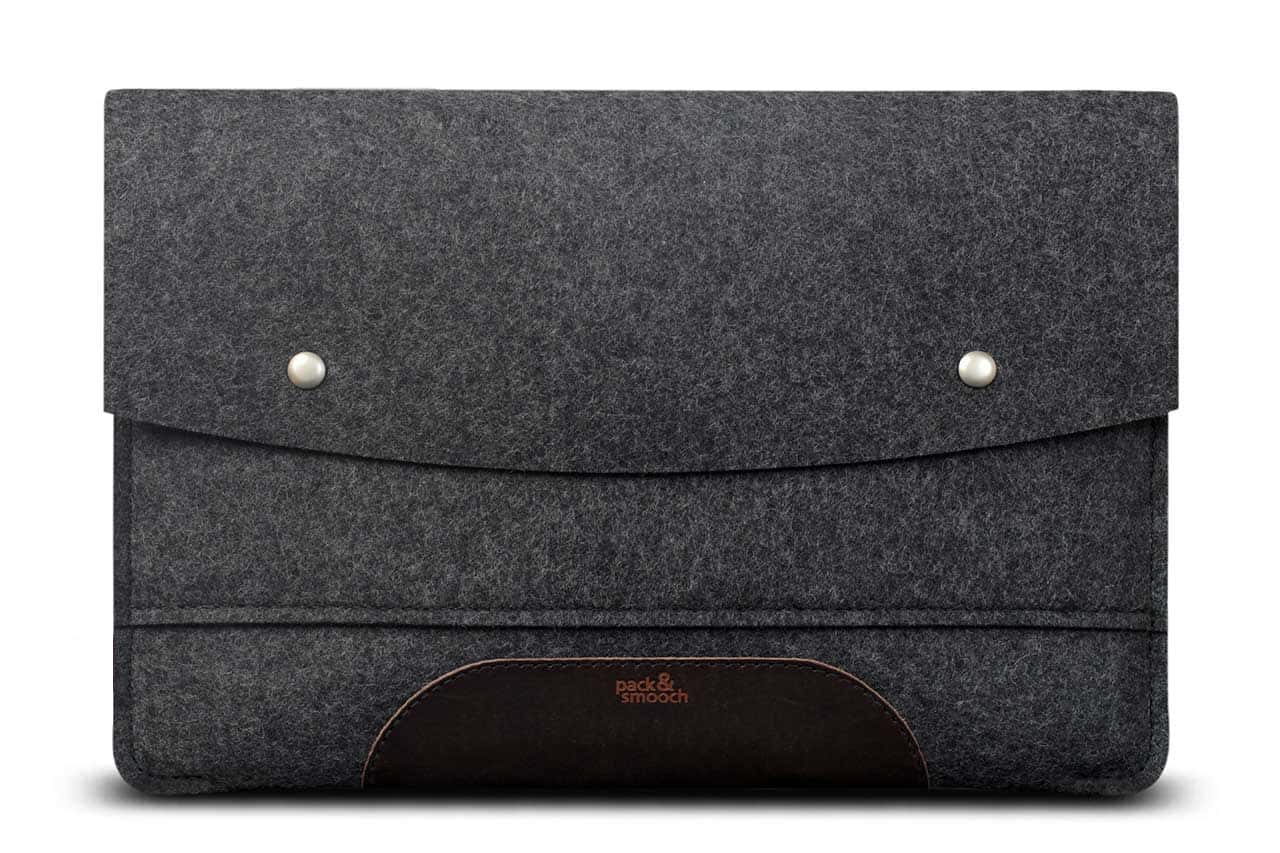

Removing stains from leather: cleaning open-pore leather gently
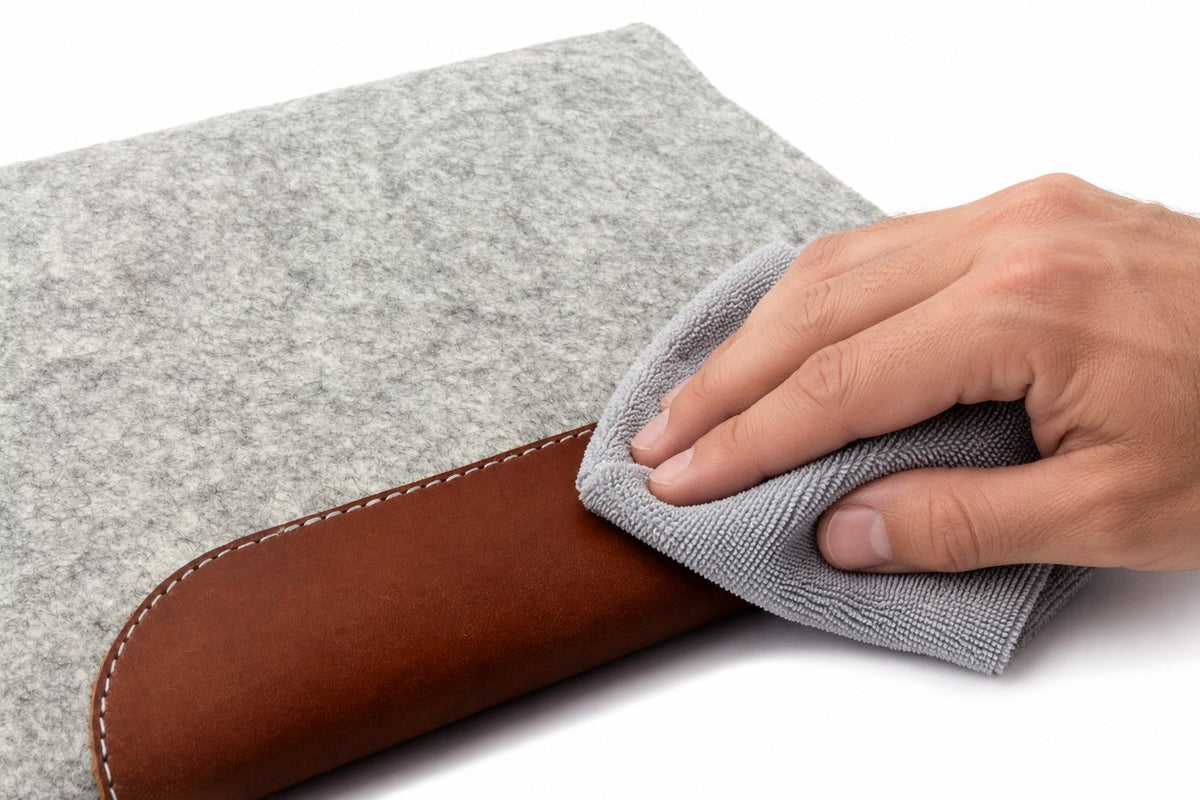
Look first, wipe second
Cleaning depends on the leather surface and on the kind of stain. Jump to the part that applies to you.
A drop of coffee, a greasy hand, a stroke from a ballpoint pen: on open-pore leather, marks like these can stay. Lift fresh liquid off carefully, do not rub it in. Then let it dry at room temperature. A harsh cleaner may not remove the stain – but it will change the surface.
This guide is mainly about open-pore smooth leather. Suede, coated leather and products made from several materials each have their own care instructions. What matters is the specification of your particular item.
Vegetable-tanned, uncoated, open-pore: what do these mean?
These terms describe different properties. They are often used as if they were interchangeable, and that is exactly where wrong care advice comes from.
| Term | What it tells you |
|---|---|
| Vegetable-tanned | Plant-based tanning agents were used in the tanning process. That says nothing about the surface finish the finished leather received. |
| Full-grain | The natural grain structure of the upper leather surface is intact. Full-grain leather can still carry a protective finish. |
| Uncoated | This has to be read together with the product specification. It does not automatically mean the leather was neither dyed nor oiled nor waxed. |
| Not laminated | No film has been applied on top. Another kind of surface treatment is not ruled out by this. |
| Open-pore | The surface can absorb liquid comparatively easily. That matters for cleaning, but it does not tell you the tanning method. |
| Natural leather | On its own, the term does not describe the surface treatment precisely enough to derive care instructions from it. |
So vegetable-tanned leather is not automatically open-pore. And the other way round, open-pore leather is not necessarily vegetable-tanned. Aniline leather describes yet another finish: its natural structure stays visible, and a light transparent finish may be present.
Start with the manufacturer's material and care information. A drop of water is not a reliable coating test: a care treatment also affects how water beads, and on sensitive leather the test itself can leave a mark. If the finish is unclear, stay with a soft dry cloth for now and ask.
Gentle everyday cleaning
Remove loose dust with a soft, clean cloth and very little pressure. Lift liquid off carefully with an absorbent cloth, preferably a white one. Do not scrub, and do not soak the leather.
Let damp leather dry at room temperature, away from radiators and direct sun. A hairdryer speeds up drying far too much. With a device sleeve, take the device out first.
A cleaner has to suit the specific leather surface. „Suitable for leather" alone is not enough for open-pore leather. Test an approved product sparingly on a hidden spot, and judge colour and surface only once it has dried completely.
What you can do about individual stains
The right-hand column is the more important one. It says where cleaning it yourself ends and where a treatment needs expertise.
| Stain | Gentle first step | Where cleaning it yourself ends |
|---|---|---|
| Water or another liquid | Lift free liquid off immediately without spreading it. Let it dry at room temperature. | Do not treat remaining rings by dampening the whole surface. On bonded or lined products in particular, that can cause further damage. |
| Fresh grease or oil | Lift surface excess off carefully with a dry, absorbent cloth. Do not rub it in. | Grease that has soaked in can stay visible. Any further treatment needs a method suited to the type of leather. |
| Ballpoint pen or ink | Do not rub. Lift off ink that is still free and liquid, carefully, without smearing it. | No experiments with alcohol, nail polish remover or hairspray. On an important or conspicuous spot, ask a leather specialist early. |
| Denim rub-off or other colour transfer | Remove only loose soiling, gently, with a soft cloth. | Do not work transferred colour with heavy pressure. Cleaning and, if needed, colour correction depend on the surface. |
| Dried-on residue | Take off only particles that are already loose, carefully, with a soft cloth or a suitable soft brush. | Do not scrape off stuck residue with a card, a knife or a fingernail. |
| Unidentified dark stain | Do not try several products one after another. If the spot is damp, let it dry first. | From the colour alone you cannot tell whether it is water, grease, dye or a change in the surface. |
With stains that have soaked in, even professional treatment can reach its limits. Water rings on open-pore leather in particular cannot be reliably removed with an ordinary water-based cleaner.
Which household remedies to leave alone
Gall soap, washing-up liquid, alcohol, white spirit and nail polish remover are not general leather care. They can change the colour, the oils or the surface treatment. That applies to pigmented leather too: a coating does not make it immune to harsh cleaners.
Erasers and dirt erasers can abrade the surface as well. Cooking oil, body lotion or baby powder are not matched to your leather and can cause dark patches or residue.
Instead, use only a product suited to the specific surface, following its instructions. More cleaner and more pressure do not automatically give a better result.
Does vegetable-tanned leather need conditioning?
Suitable care can make sense. Which product and how often depends on the surface, the use and the surroundings. A fixed schedule does not apply to every leather item.
Take a care product recommended for that type of leather, apply it sparingly, and test it on a hidden spot first. Conditioning is not stain removal. With light, absorbent leather in particular, expect a possible change in colour.
Vegetable-tanned leather changes with use and develops a patina. That does not necessarily make a stain disappear. It can remain visible as a ring, a dark patch or a difference in colour.
Frequently asked questions
How do I clean real leather?
„Real leather" does not yet tell you which cleaning method is suitable. For loose dust, a soft dry cloth is often enough. Before any damp cleaning or care product, the type of surface has to be established.
Can I use gall soap?
Not as a general household remedy. For open-pore leather it is not a safe standard recommendation. Use only a cleaning method explicitly suited to that surface.
What do I do if a stain stays?
Stop before repeated rubbing or further products make the spot larger. A leather specialist can judge whether cleaning or another treatment is possible. Complete removal cannot be promised.
How do I remove dried stains?
Take off only loose residue, carefully. A stain that has soaked in cannot simply be wiped off the surface. Further treatment depends on the cause and the type of leather.
Does this apply to nubuck and suede as well?
No. Suede needs its own tools and products. Suitable brushes can help, and depending on the finish there are special cleaning foams. Smooth-leather cream is not a general alternative, because it can change the colour and the nap.
Can I apply leather grease or cream?
Only if the product is suited to that type of leather. There is no general rule that more grease is better. With light leather in particular, test on a hidden spot first. A care cream does not replace targeted stain treatment.
What applies to sleeves made of leather and wool felt?
Both materials and the way they are joined have to be taken into account. Washing instructions for pure wool clothing cannot be transferred to a sleeve with leather, stitching or bonded seams. Follow the care instructions for the finished sleeve. Without explicit approval, neither soak it nor put it in the machine.
Related
- Material & Care – the details on our materials
- Leather sleeves for iPad and MacBook
- MacBook sleeves and bags
- Desk mats
- Leather coasters
- Card holders
- Key cases and organizers
- Laptop bags
- All accessories in leather and wool felt
The care information for your particular item is on its product page under Material & Care. In case of doubt, that information applies.